
 By Jonathan Hampton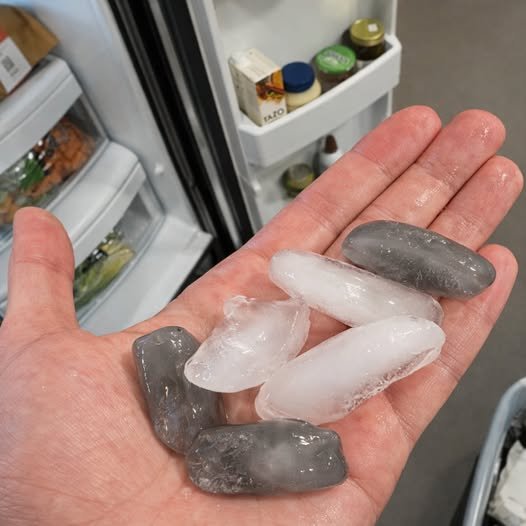
You bought your refrigerator about a year ago, everything seemed normal, and then suddenly your ice starts looking… wrong. In the photo, some pieces are the usual cloudy white, but others are noticeably gray, with a darker tint that doesn’t belong in clean ice.
Here’s the key takeaway: don’t eat or serve the gray ice until you figure out what’s causing it.
Why Ice Turns Gray in a Refrigerator Ice Maker
Gray ice almost always means something is getting into the water or the ice-making path. The most common causes include:
1) A water filter issue (most common)
Refrigerator filters can shed carbon “fines” (tiny gray/black particles) or stop filtering effectively when they’re overdue. Many fridge filters are designed for replacement around every 6 months (varies by model and water quality). If it’s been a year, the filter is a prime suspect.
2) Sediment or minerals in your water supply
If your home water has higher sediment or minerals—especially manganese (can appear gray/black) or certain particulates—ice can freeze with discoloration. This can happen intermittently if the water line gets disturbed (construction, hydrant flushing, plumbing work).
3) Biofilm or buildup inside the ice maker or bin
A dirty ice bin, dispenser chute, or internal surfaces can introduce residue. Sometimes this shows up as discoloration, specks, or odd-looking ice.
4) Deteriorating parts (hose, gasket, or internal components)
In some cases, a degrading rubber/plastic component or an aging supply line can release particles that tint ice.
Is Gray Ice Safe to Use?
Treat it as unsafe until proven otherwise.
Gray color means contamination of some kind—even if it ends up being “just carbon dust,” you don’t want to assume that. Discard the gray ice and avoid using the ice maker temporarily until you complete the

