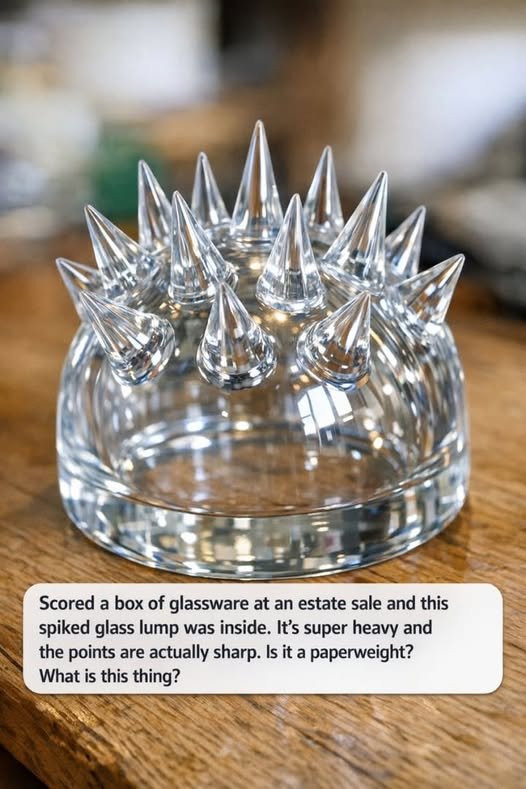
Scored a box of glassware at an estate sale and this spiked glass lump was inside. It’s super heavy and the points are actually sharp. Is it a paperweight? What is this thing?
Similar Posts
Pope Leo Responds Firmly After Donald Trump Calls Him “Weak” in Latest Remarks
Recent discussions circulating across social media platforms have drawn attention to alleged comments involving former U.S. President Donald Trump and a figure referred to online as Pope Leo, in relation to international political and humanitarian issues. According to various online posts and unverified reports, tensions reportedly emerged after comments attributed to Pope Leo regarding global…
If a man scratches the palm of a woman’s hand, here’s what it means
Flirting isn’t always about cheesy pick-up lines or grand gestures. In fact, the most powerful signals of attraction are often silent. From a soft touch to a meaningful glance, our bodies can speak volumes — if you know what to look for. Experts say there’s a fine line between friendly and flirty, and understanding the…
Armed Robber Shot By Good Samaritan, Family’s Reaction Sparks Outrage
Note: we are republishing this story which originally made the news in November 2013. When Adric White broke into and entered a Family Dollar, he drew his gun and demanded that the cashier hand over all the cash. White, 18, thought he knew what he was doing when he held the employees hostage at gunpoint….
A Simple Photo That Led to Divorce—The Unexpected Reason Behind It
It was a peaceful afternoon, the kind that made me appreciate the beauty of nature. As I rode along a scenic mountain trail, the quiet serenity inspired me to take a quick photo with my horse—a simple snapshot of the moment. Without much thought, I sent it to my husband, expecting nothing more than a…
19 Pics From The Group That Shares Photos That You Might Need To Look At Twice To Understand (New Pics)
How Did He Fit In There #2 Just An Owl Disguised As A Giant Moth To Give Someone A Heart Attack #3 I Now Pronounce You Man And Horse Wife #4 The Side Of 🔒 Continue Reading →
I unplugged my microwave between uses for 2 weeks this April to see if it would cut my electric bill. This is what happened
In the quest to reduce energy consumption and lower electric bills, small lifestyle changes can sometimes make a significant impact. With Earth Day approaching in April, I decided to take a closer look at my household energy usage to identify areas for improvement. One appliance that caught my attention was the microwave, a kitchen staple…