By the 1920s and 1930s, glass flower frogs were commonplace in households, prized for their ability to transform a simple vase of flowers into a stunning arrangement. They remained popular through the mid-20th century, a testament to their utility and the enduring appeal of well-arranged florals.
6. Common Materials And Styles: From Glass Lumps To Metal Cages
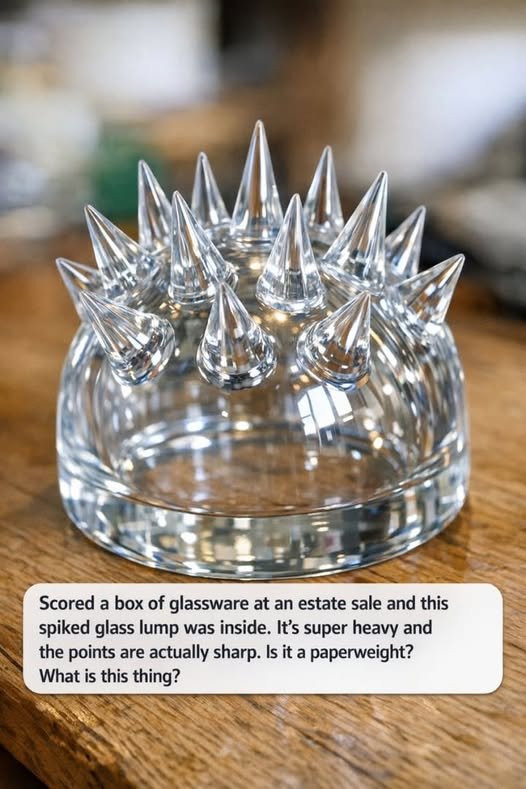
Flower frogs come in a variety of materials and styles, each suited to different types of floral displays. Glass flower frogs, like the one in question, are valued for their beauty and transparency. However, metal cage-style frogs, made from brass or steel, are also common and offer a different approach to arranging.
Other materials used in the production of flower frogs include ceramic and plastic, each offering unique advantages and aesthetic qualities. The choice of material often depends on the desired look of the arrangement and the type of flowers being used.
7. How To Safely Handle And Display A Spiked Glass Flower Frog
Handling a spiked glass flower frog requires care due to its sharp points and significant weight. When moving or cleaning it, it is advisable to wear protective gloves to avoid cuts. Additionally, storing it properly when not in use is essential to prevent accidental injury.
When displaying a flower frog, it is best placed at the bottom of a vase where its spikes can be put to use. For those who wish to showcase the frog itself, placing it on a low shelf or table, safely away from passersby, can highlight its unique design without posing a risk.
8. Creative Modern Uses For Vintage Glass Flower Frogs
While originally designed for floral arrangements, vintage glass flower frogs can be repurposed for modern uses. They make excellent holders for pens and pencils on a desk, providing a unique and artistic way to organize stationery.
Additionally, some people use them as unique display pieces for small collectible items, like marbles or shells, turning the flower frog into a decorative object in its own right. Its historical significance and distinctive appearance make it a conversation starter in any setting.
9. How To Tell If Your Glass Flower Frog Has Any Real Value
Determining the value of a glass flower frog involves assessing its age, condition, and rarity. Older pieces, especially those from renowned manufacturers, may hold considerable value among collectors. The presence of unique design features or markings can also enhance its worth.
Condition is crucial; chips, cracks, or missing spikes can significantly reduce a frog’s value. Consulting with antique dealers or collectors familiar with floral arranging tools can provide insights into its market value.
10. Cleaning, Caring For, And Storing Old Glass Flower Frogs
Cleaning a glass flower frog should be done carefully to preserve its integrity and appearance. A gentle wash with mild soap and warm water is usually sufficient. Avoid using abrasive materials that could scratch the glass.
For storage, wrapping the flower frog in a soft cloth and keeping it in a padded box can prevent damage. Ensuring it is kept in a dry environment will also help preserve its condition over time.
11. Where To Find More Flower Frogs And Learn About Their History
For those interested in exploring the world of flower frogs further, estate sales and antique shops are excellent places to start. Online marketplaces also offer a wide selection, though it’s important to verify the authenticity and condition of items before purchasing.
To learn more about their history, visiting museums with decorative arts collections or reading books on the history of floral arranging can provide valuable insights. Joining forums or groups dedicated to vintage home goods can also be a great way to connect with other enthusiasts and expand your knowledge.
Similar Posts
Couple Claims Restaurant Added “Bad Parenting” Fee to Bill: What Happened
as an actual charge. In at least one reported case involving a larger group with many children, he suggested that the issue was more about setting expectations—and he said that customers who were told about a “parent surcharge” did not ultimately have to pay a $50 fee. Why the story went viral This type of controversy…
My Family Asked Me to Cover My Sister’s Debt—What Happened Next Changed Everything
trust. The room, once filled with certainty, shifted into confusion and tension. The situation became even clearer when I revealed additional evidence. My name had been placed on major financial documents without consent, including a guarantee tied to a large debt. Voices were raised, and emotions took over, but beneath it all was a simple…
A School Trip That Took an Unexpected Turn: What Happened to Kenwood Middle School
for emergencies, it does not remove the emotional weight of responding to serious incidents involving young people. Support systems are often available for these professionals, including counseling and peer support, recognizing that processing such experiences takes time and cannot always be done immediately. Healthcare teams caring for the injured also play a critical role. Their…
Famous comedian sparks outrage with Erika Kirk parody: “This is too far”
turned what some called “just satire” into something that, for many, felt like desecration. Yet the backlash revealed more than outrage at a single comedian. It exposed how polarized grief itself has become. To critics, the sketch was proof of a sneering culture that dehumanizes political opponents. To defenders, it was a brutal but legitimate…
Check Your Wallet: How to Tell If Your $2 Bill Is Worth More Than Face Value
you happen to come across a note that looks unusually well-preserved, it may be worth setting aside rather than spending. Another factor to consider is rarity within certain print runs. Older series, limited print quantities, or unusual production quirks can increase demand among collectors. While most $2 bills remain close to their face value, a…
Armed Robber Shot By Good Samaritan, Family’s Reaction Sparks Outrage
simply turned around and not gotten involved in the situation. While it was admittedly risky for the Good Samaritan to pull his gun and take part in the robbery, trying to stop it, he got involved and then fired five shots when he felt threatened by White. Because the Good Samaritan felt threatened by White…