Shattered Rhythm: The Mysterious Midnight Disappearance of Nancy Guthrie
Sheriff Nanos, along with a team of experienced professionals including former federal investigators, approached the case with caution. Early assumptions were set aside in favor of methodical analysis.
This was not a situation that allowed for rushed conclusions.
Without traditional leads, attention turned toward the one consistent witness that could not be influenced or intimidated: data. The pacemaker logs became central to the investigation, offering a timeline that was both precise and incomplete.

Every recorded beat told part of the story. Every missing second raised new questions.
Analysts began examining the device’s signal patterns, searching for anomalies. The moment of disconnection was scrutinized repeatedly, not for what it showed, but for what it didn’t.
There were no irregular fluctuations beforehand. No indicators of sudden medical distress. The transition from normal function to complete silence was abrupt, almost clinical in its execution.
To investigators, that detail stood out.
It suggested control.
Inside the home, forensic teams worked carefully, documenting every inch of the environment. Nothing was considered too minor to matter. Subtle disturbances were cataloged. Patterns were noted. Even the absence of expected evidence became part of the analysis.
There was no ransom note. No direct communication. No immediate demand.
That absence shifted the direction of the case.
The possibility of randomness began to fade. In its place, a more complex and troubling theory started to take shape. This was not necessarily an opportunistic act. It may have involved prior observation, awareness of routine, and an understanding of vulnerability.
To act at that specific hour—when the world is at its quietest—suggested timing that was not accidental.
Nancy’s life, by all accounts, had been long and relatively private. She was not someone associated with controversy or public conflict. Her daily routines were simple, structured, and predictable.
Yet those very qualities may have made her more exposed.
Investigators began mapping out her recent interactions, reviewing records, and speaking with individuals who had crossed paths with her in the weeks leading up to the incident. Each conversation added context, but no immediate clarity.
The challenge was not a lack of information—it was the absence of a clear pattern within it.
As the investigation continued, the focus narrowed to a critical window: the four hours surrounding the disappearance. This period, partially documented through digital logs and partially left unexplained, became the central puzzle.
Every minute within that window carried weight.
Experts described the situation as reconstructing a timeline from fragments. Unlike traditional cases where physical evidence provides direction, this one relied heavily on interpretation. On reading between lines that were not fully visible.
The community, meanwhile, reacted with a mixture of concern and disbelief. The idea that something like this could occur without immediate explanation created a ripple effect of unease.
People began asking questions that extended beyond the case itself.
How does something like this happen unnoticed?
What details are we overlooking in our own environments?
Where does certainty end, and vulnerability begin?
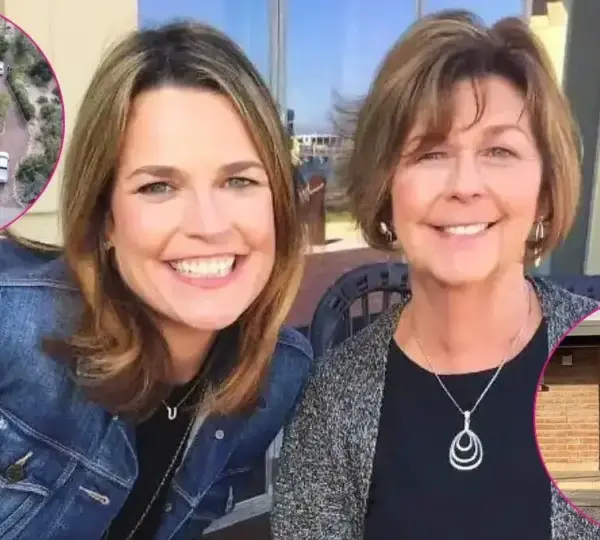
For Savannah, those broader questions were secondary. Her focus remained singular. Every development, every delay, every unanswered detail brought her back to the same point: finding her mother.
The emotional toll was evident, even when unspoken.
Behind the public statements and composed appearances was a reality defined by waiting. Waiting for updates. Waiting for leads. Waiting for something—anything—that could move the situation forward.
But the silence persisted.
The pacemaker, once a symbol of continuity, remained inactive. Its last recorded signal stood as a fixed point in time—a moment that investigators continued to revisit, hoping to uncover something previously missed.
In many ways, it became the most reliable witness.
Yet even that witness could not provide a complete account.
As days passed, the case remained open, active, and unresolved. Efforts continued across multiple fronts, combining traditional investigative methods with advanced technical analysis.
There were no definitive answers yet.
Only fragments. Only possibilities.
And at the center of it all, a single, unshakable reality remained: a woman had disappeared under circumstances that defied easy explanation.
The clock, as some would describe it, was still ticking. But for those closest to the situation, it did not feel like a countdown.
It felt like distance.
Distance from the last confirmed moment.
Distance from certainty.
Distance from understanding what truly happened in those early morning hours.
And until that distance could be closed, the silence left behind would continue to speak louder than anything else.