 By Jonathan Hampton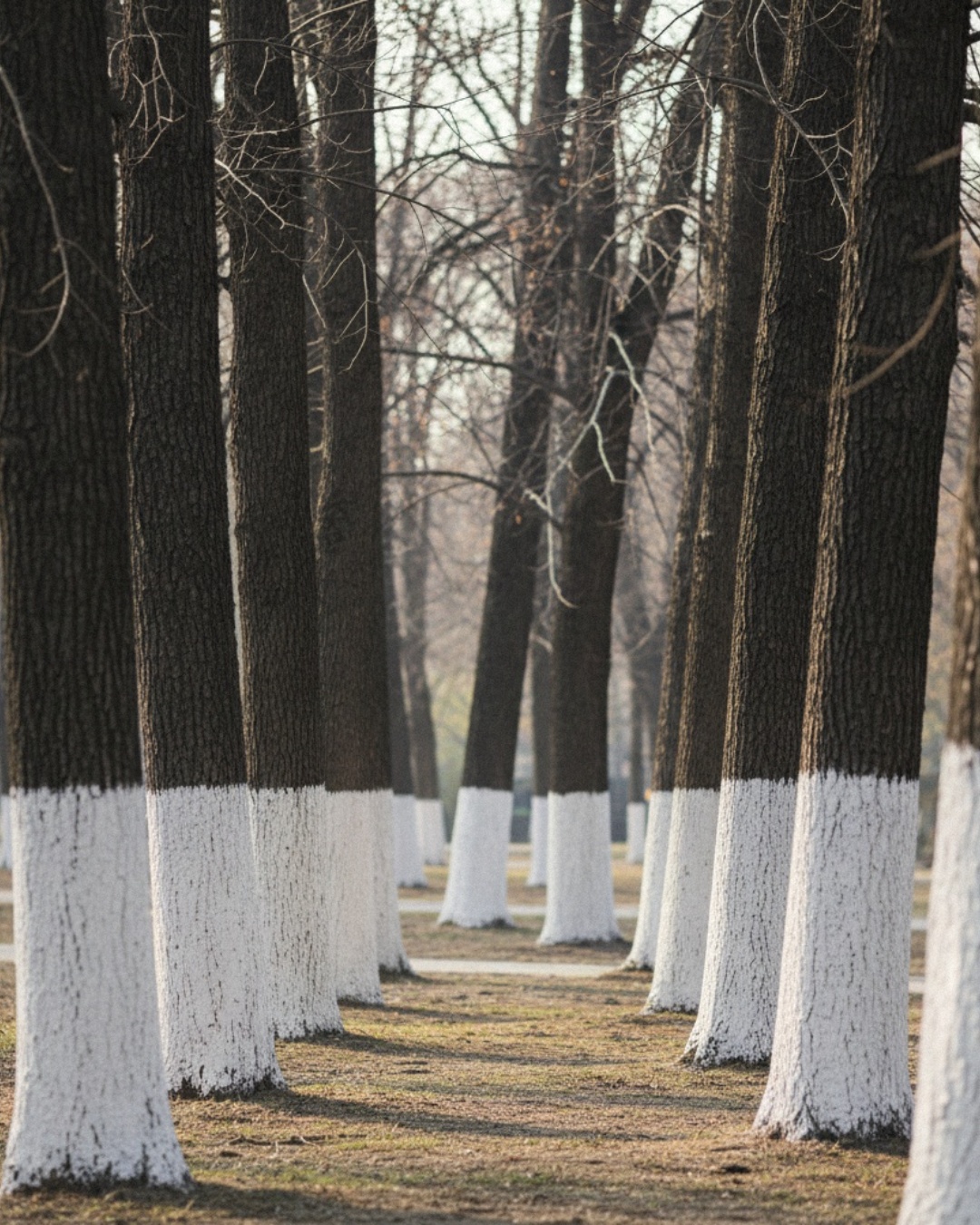
The white trunk stands out as a symbol of preservation amidst the forest’s many color-coded indications, such as purple lines designating private property boundaries or orange dots designating a tree for the wood harvest. Like putting a winter shroud on a delicate seedling, it is a yearly ritual for the devoted caretaker. This straightforward bucket of white paint is frequently the difference between a tree that perishes in the first hard cold and one that survives for a century in a landscape where young trees are under increasing pressure from unpredictable climate fluctuations and growing pest populations.
In the end, a white-painted trunk is a mark of proficiency. It shows that the caregiver is aware of the sensitive biology of the “leafy giants” they are responsible for. Gardeners guarantee that their trees remain strong and prolific by protecting the trunk from the deceiving warmth of a winter sun. This proves that sometimes the most effective technology in nature is a simple coat of white paint.
