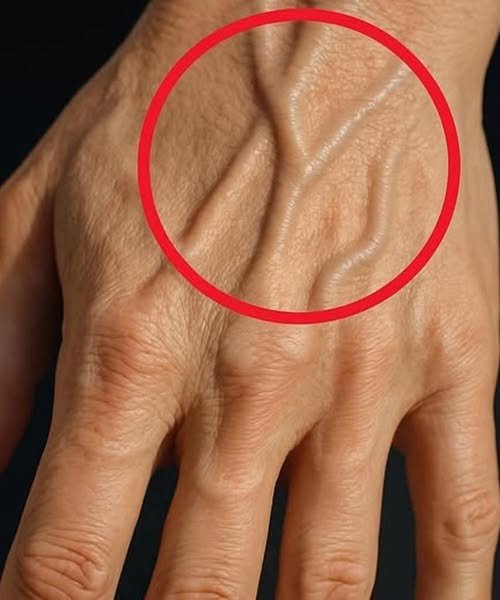
Understanding What the Appearance of Your Hands Might Tell You About Overall Wellness
Warning Signs That Actually Matter
Rather than focusing on whether you can see veins in your hands, pay attention to symptoms that medical professionals recognize as genuine indicators of potential filtration concerns.
Persistent swelling deserves attention, particularly if it appears in your hands, ankles, feet, or around your eyes. This type of swelling typically doesn’t come and go quickly. It remains consistent and may worsen as the day progresses.
Changes in bathroom patterns warrant evaluation. If you notice you’re using the bathroom much more frequently than usual, or conversely, much less often, this could signal something worth investigating.
The appearance of foam or bubbles in the toilet after urination, especially if it persists, may indicate protein in places it shouldn’t be. This can be an early warning sign worth discussing with a healthcare provider.
Chronic fatigue that doesn’t improve with adequate rest and sleep may reflect waste product accumulation affecting your energy levels and overall function.
Elevated circulation pressure readings, particularly if they develop suddenly or increase despite previous stability, often connect to filtration function.
Unexplained shortness of breath, especially during activities that didn’t previously cause breathing difficulty, can indicate fluid retention affecting the lungs.
Persistent nausea or significant loss of appetite, particularly when combined with other symptoms, may reflect waste product buildup affecting the digestive system.
If you notice visible veins accompanied by significant swelling, discomfort, sudden changes in circulation, or skin color changes, this could indicate vascular concerns that require evaluation. But these would be circulation issues, not filtration system problems.
Understanding What Really Indicates Filtration Health
The most accurate and reliable way to assess how well your filtration system is functioning doesn’t involve looking at your hands at all.
Medical professionals use specific tests that provide objective, measurable data about organ function. Blood tests measure waste product levels and calculate filtration rates based on standardized formulas. These numbers give precise information about how efficiently your organs are working.
Analysis of bathroom output can detect proteins, blood cells, or other substances that shouldn’t be present. These findings offer direct evidence of filtration function.
Regular monitoring of circulation pressure provides important information, since these organs play a key role in pressure regulation throughout the body.
A thorough medical consultation allows healthcare providers to evaluate your complete health picture, including risk factors, family history, medications, and symptom patterns.
These assessment methods provide actual evidence about filtration function. They’re far more reliable than trying to interpret the visibility of veins in your hands.
What Visible Veins Actually Indicate
When you look at your hands and notice prominent veins, what you’re typically seeing reflects normal anatomical variation between individuals.
The visibility of your veins primarily indicates the thickness of your skin, the amount of fatty tissue beneath it, your current hydration status, your genetic inheritance, and your age.
These factors affect appearance but don’t provide meaningful information about your internal organ function. You can have very visible veins while having perfectly healthy filtration systems. Conversely, someone with barely visible hand veins could have compromised organ function.
The appearance and the function simply aren’t connected in a diagnostically meaningful way.
Taking a Sensible Approach to Health Monitoring
Understanding the actual warning signs of filtration concerns allows you to monitor your health appropriately without unnecessary anxiety.
If you’re in a higher risk category, perhaps because of existing circulation pressure concerns, metabolic conditions, family history of organ problems, or certain medications, regular screening makes sense. Your healthcare provider can recommend an appropriate schedule for blood tests and other monitoring.
For the general population without specific risk factors, being aware of genuine warning signs allows you to seek evaluation if something concerning develops. But you don’t need to worry about visible hand veins as a health indicator.
Focus your attention on symptoms that actually matter. Persistent swelling. Significant changes in bathroom patterns. Unexplained fatigue. Elevated circulation pressure. These are the signs worth noticing and discussing with medical professionals.
The Bottom Line on Hand Veins and Health
Visible veins on your hands are almost always nothing more than a normal characteristic of your individual anatomy and physiology.
They result from natural aging processes, your body composition, genetic factors, current hydration levels, environmental temperature, or recent physical activity. These are all normal, benign explanations for why you might notice veins more prominently at certain times.
Visible hand veins are not a reliable or recognized indicator of how well your filtration system is functioning. Medical professionals don’t use vein visibility as a diagnostic tool for organ health because there’s no established connection between the two.
When filtration function becomes compromised, the body reveals this through specific, measurable changes. Fluid balance shifts, usually causing swelling rather than making veins more visible. Bathroom patterns change. Waste product levels increase in the blood. Circulation pressure rises. Laboratory values change in measurable ways.
These are the genuine indicators that healthcare providers look for when evaluating organ function. None of them involve simply looking at whether you can see veins in your hands.
If you have concerns about your overall health or specifically about how well your filtration system is working, the appropriate response isn’t to examine your hands for vein visibility. Instead, schedule an appointment with a healthcare provider who can perform proper assessment through blood work, examination, and medical history evaluation.
Your hands can indeed reveal certain things about your health. Circulation, hydration status, age-related skin changes, and general vascular health may be somewhat reflected in hand appearance. But assessing internal organ function requires more sophisticated medical evaluation than visual inspection can provide.
Understanding this distinction helps you focus your health awareness on factors that actually matter while avoiding unnecessary worry about normal anatomical variations that carry no diagnostic significance.