 By Jonathan Hampton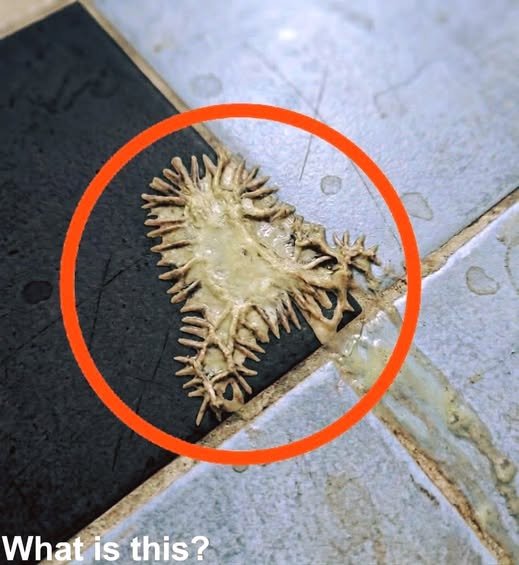
After several minutes of speculation, we decided it was better not to touch it directly and instead try to identify it using reliable information rather than guesswork.

We took a few photos from different angles, trying to capture its texture and shape clearly enough that it could be compared with known harmless substances or growths.
As we waited for answers, the object remained unchanged, quietly existing in the corner of the bathroom as if unaffected by our confusion and attention.
During that time, I noticed how our perception of the entire room had shifted, as though the presence of one unknown element had altered the feeling of the space.
Eventually, after comparing descriptions and images, we came to understand that it was most likely a harmless form of slime mold that can appear in damp environments.
Specifically, such organisms are known to develop in areas with moisture, organic residue, or limited airflow, often appearing more alarming than they actually are in nature.
The relief we felt was gradual rather than immediate, as our bodies and minds slowly adjusted from suspicion and tension back toward normal, everyday calm.

Once we were confident there was no danger, we carefully cleaned the area using standard household cleaning products and ensured the surface was thoroughly dried.
We also opened the bathroom window to improve airflow, hoping to reduce the moisture conditions that may have allowed the growth to appear in the first place.
As we cleaned, the situation began to feel less frightening and more slightly absurd, as often happens when fear is replaced by understanding after uncertainty fades.
We even found ourselves laughing quietly at how intensely we had reacted to something that, in hindsight, posed no real threat to our health or safety.
Still, the experience left a lasting impression on both of us, not because of the object itself, but because of how it affected our perception of uncertainty.
It reminded us how quickly the mind can escalate unknown situations, especially when something unfamiliar appears suddenly in a place we consider safe and controlled.
There was also a subtle lesson in how perception can override logic in the moment, even when no concrete evidence of danger is actually present.
In the days that followed, I noticed myself checking the bathroom floor more often than before, especially in corners where shadows and moisture tend to collect.

It wasn’t fear exactly, but a heightened awareness, as if my mind had learned to pay closer attention to details it previously ignored without thought.
My girlfriend admitted she did the same, occasionally glancing at the tiles before entering, even though we both knew there was no real reason for concern anymore.
Over time, that behavior faded naturally, but the memory of the experience remained as a small reminder of how unfamiliar things can disrupt routine thinking.
What stayed with me most was not the slime mold itself, but the realization of how easily uncertainty can transform something harmless into something emotionally overwhelming.
It showed how human perception is shaped not only by reality, but also by interpretation, context, and the stories we unconsciously build when information is missing.
Now, whenever I step into that bathroom, I still glance at the floor out of habit, not because I expect anything unusual, but because memory lingers longer than logic.
It is a small reminder that even the most ordinary spaces can briefly feel unfamiliar when something unexpected appears, and that understanding often arrives after fear, not before it.
