
 By Jonathan Hampton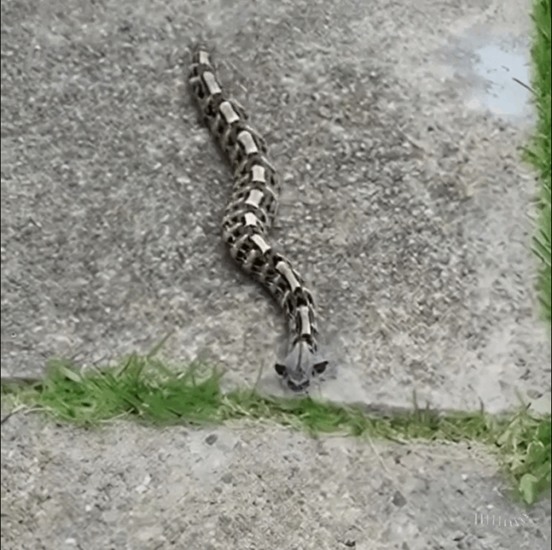
It turned out to be a Gaboon viper. I still thank my lucky stars I didn’t linger — even a second longer or an impulsive reach could have triggered a deadly strike from this elusive snake.
The Gaboon viper, scientifically known as Bitis gabonica, is among Africa’s most formidable snakes and is recognized as the heaviest venomous snake on the planet, with impressive adaptations for hunting and camouflage.
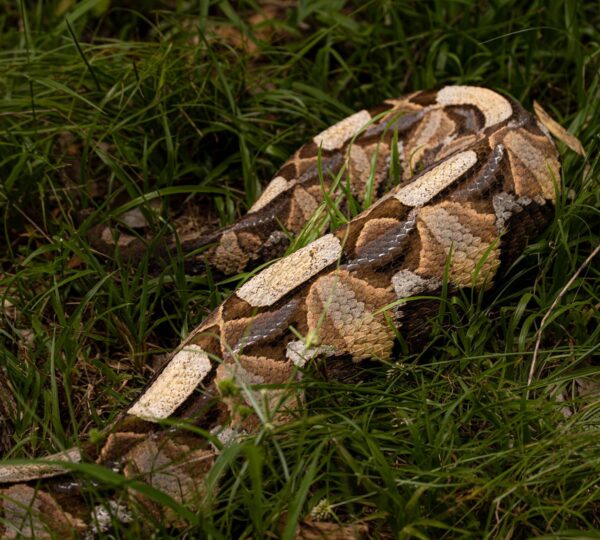
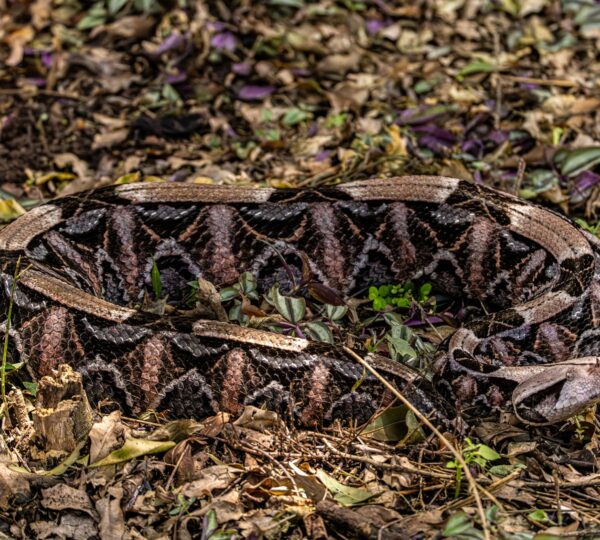
Its natural camouflage is remarkable, making it almost invisible among fallen leaves and forest debris. Even trained eyes can miss it, as the pattern on its scales blends seamlessly into its surroundings.
Gaboon vipers are native to the rainforests and savannahs of sub-Saharan Africa, with populations found in countries including Gabon, Cameroon, Nigeria, and the Democratic Republic of Congo. They thrive in dense, humid forested areas.
One of the most chilling aspects of the Gaboon viper is its size. Adult snakes can grow up to two meters in length, making them not only heavy but physically imposing predators in their habitat.
In terms of weight, Gaboon vipers can reach up to eight kilograms, a substantial mass for a terrestrial snake, which contributes to their lethality and allows them to immobilize prey effectively using their immense strength.
Their fangs are perhaps the most terrifying feature: at up to five centimeters long, Gaboon viper fangs are the longest of any snake. These specialized tools inject venom deeply into their prey.
The venom of a Gaboon viper is potent and complex, containing hemotoxins that destroy tissue, disrupt blood clotting, and cause severe internal damage. Human bites are extremely dangerous and require immediate medical intervention.
Despite their deadly capabilities, Gaboon vipers are typically docile. They remain motionless and rely on their camouflage to avoid threats. Aggression is rare, and they usually strike only when provoked or accidentally stepped on.
Most Gaboon viper bites occur by accident, often when humans inadvertently step near one in forested areas. Encounters are dangerous primarily due to the snake’s venom potency and the length of its fangs.
The diet of the Gaboon viper includes small mammals, birds, amphibians, and occasionally reptiles. Their wide gape allows them to swallow relatively large prey, including hedgehogs or small antelope, whole without difficulty.
They are ambush predators, lying in wait for prey to wander close before delivering a swift, precise strike. Their camouflage is essential for this hunting strategy, allowing them to remain virtually invisible until it is too late.
Gaboon vipers rely on both smell and heat-sensing pits to detect prey. These specialized sensory organs allow them to locate warm-blooded animals even in dense undergrowth, enhancing their hunting efficiency.
Unlike many other venomous snakes, the Gaboon viper has a relatively slow metabolism. They can survive on one large meal for several weeks, a testament to their evolutionary adaptation to the rainforest ecosystem.
Reproduction in Gaboon vipers is viviparous, meaning they give birth to live young rather than laying eggs. Litter sizes can range from 20 to 50 offspring, depending on the mother’s size and health.
The venom delivery mechanism of Gaboon vipers is highly advanced. Their long fangs penetrate deeply, ensuring maximum venom transfer into the prey’s bloodstream, which immobilizes it almost immediately.
Though they are lethally venomous, Gaboon vipers are not territorial and generally avoid confrontations with humans. Their docile nature makes most encounters accidental rather than predatory or aggressive.
In areas where Gaboon vipers are common, locals are often educated to watch their step, particularly in dense forests or plantations, to prevent accidental bites, which can be fatal without immediate access to antivenom.
Gaboon vipers can live up to 20 years in captivity under ideal conditions, though in the wild their lifespan is typically shorter due to predation, human activity, and environmental hazards within dense forest habitats.
Their scales are a masterpiece of natural camouflage. The geometric patterns on their skin not only protect them from predators but also enable them to stalk prey effectively, as they remain unnoticed even at close range.

