New study reveals an early Alzheimer’s warning sign that can appear 10 years before memory loss
Alzheimer’s disease is one of the most heartbreaking diagnoses a family can face. The devastating condition gradually robs people of their memories, independence and, eventually, their ability to recognize the people they love.
But what if the first warning signs appeared somewhere unexpected, years before a person even noticed something was wrong with their memory?
What the new study found
A new study by researchers at the University of Oulu and the University of Eastern Finland, published in October 2026, has drawn attention to a potentially unsettling discovery.
Researchers identified a possible early warning sign of Alzheimer’s disease that may appear years before the more familiar symptoms, including memory loss, begin to emerge.
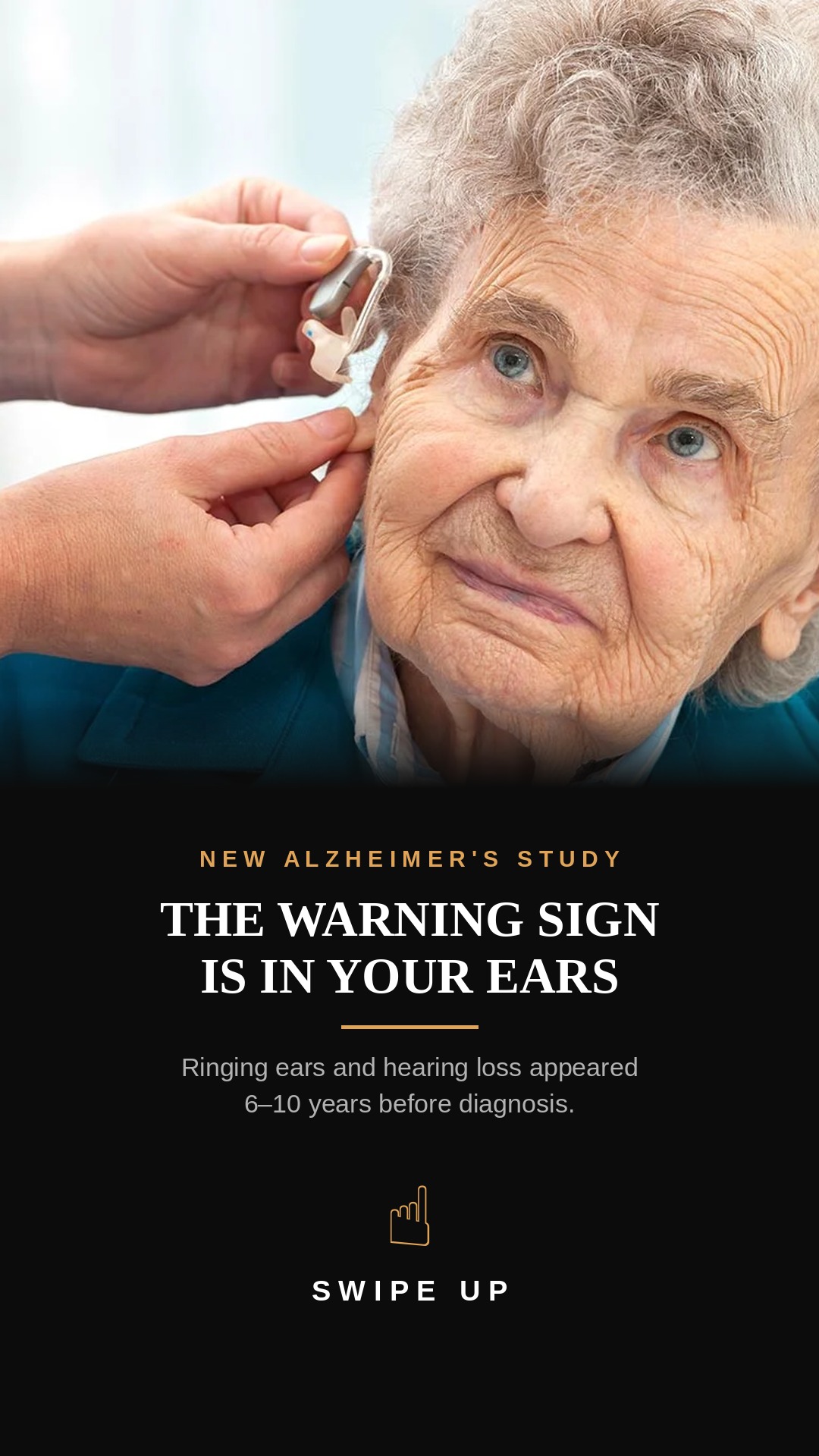
The research suggests that certain hearing problems, including persistent ringing in the ears and nerve-related hearing loss, may be associated with an increased risk of developing early-onset Alzheimer’s disease.
And the timing is particularly striking: these problems were more common among people who would later receive an Alzheimer’s diagnosis as much as 10 years before their condition was identified.
Hearing problems could appear years before an Alzheimer’s diagnosis
Published in the journal Alzheimer’s & Dementia, the research examined health problems experienced by people who were eventually diagnosed with early-onset Alzheimer’s, meaning the disease was identified before the age of 65.
Researchers found that certain ear-related conditions were more frequently reported in the years leading up to diagnosis.
In particular, people who would later develop Alzheimer’s were more than twice as likely to have experienced tinnitus, which causes persistent ringing or buzzing in the ears, or bilateral sensorineural hearing loss, a type of hearing impairment involving damage to the inner ear or auditory nerve pathways.

The difference was particularly noticeable six to 10 years before diagnosis.
According to figures discussed by American healthcare researcher Neal K Shah in a YouTube video titled ”10 Dementia Warning Signs You’re Missing,” 4.7% of future Alzheimer’s patients had these conditions, compared with 2.1% of people in the control group.
The figures rose to 5.2% and 2.9%, respectively, during the final five years before diagnosis.
While the findings do not establish that hearing problems cause Alzheimer’s, they offer an intriguing glimpse into how early the disease may begin affecting the body.
Why would Alzheimer’s affect hearing?
Scientists have several possible explanations for the connection.
One theory involves the brain’s limited cognitive resources, sometimes described as cognitive reserve.
When someone struggles to hear conversations, particularly in noisy environments, the brain must work harder to interpret sounds and understand speech.
That additional effort could leave fewer cognitive resources available for other tasks, including memory and concentration.
Another possibility is that Alzheimer’s-related changes may begin affecting the brain’s auditory processing systems long before noticeable memory problems develop.

The disease is associated with the accumulation of abnormal proteins, including amyloid plaques and tau tangles, which damage nerve cells and interfere with communication between different parts of the brain.
If areas responsible for processing sound are affected early, hearing-related difficulties could potentially emerge before more obvious cognitive symptoms.
In other words, what initially appears to be an ordinary hearing problem may sometimes be connected to changes taking place much deeper in the brain.