
 By Jonathan Hampton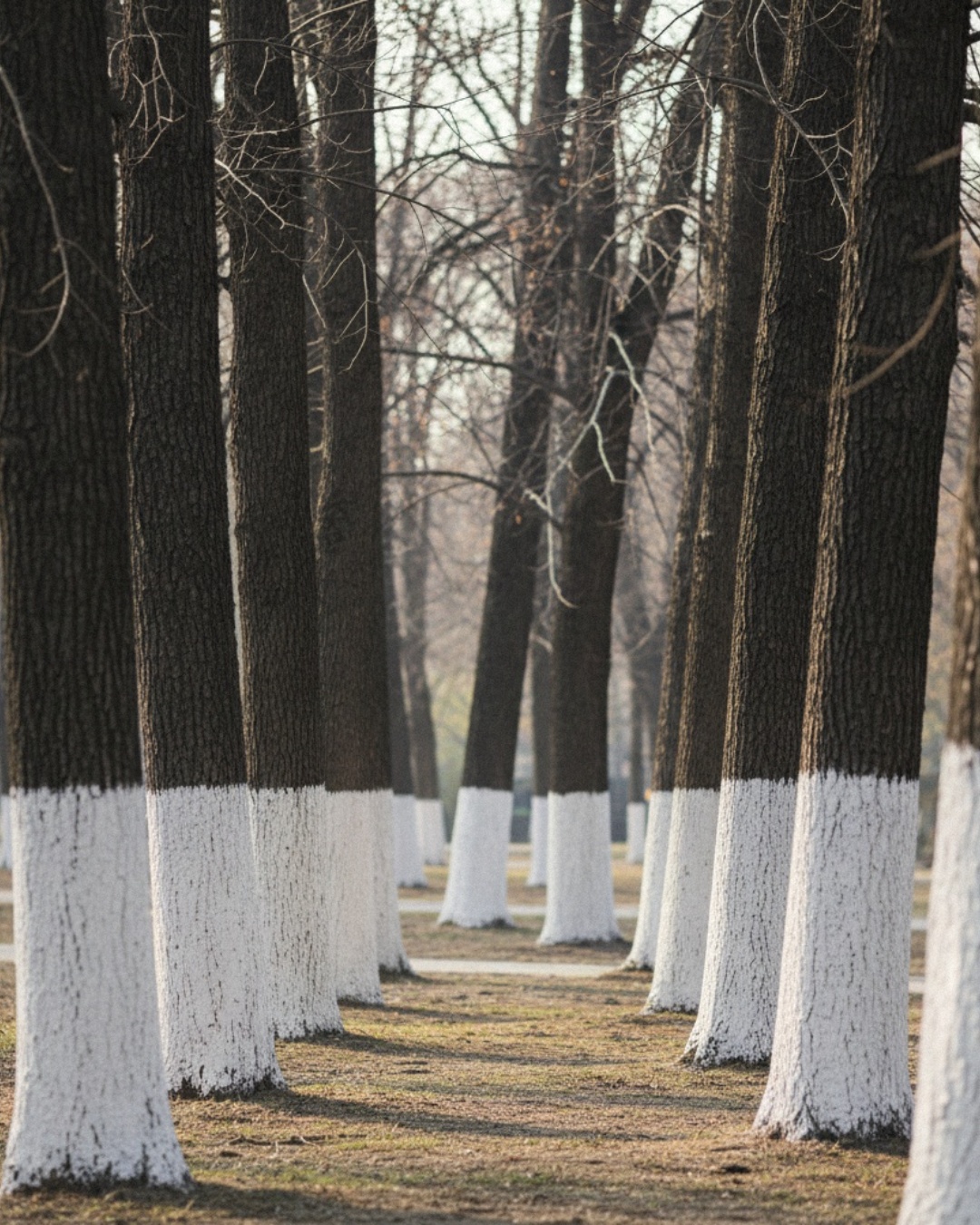
Sunscald is a physiological condition that this paint primarily battles. In order to withstand the bitter cold, trees go into a dormant state throughout the winter. On bright, sunny winter days, however, a tree’s dark bark absorbs the thermal energy of the sun, especially if the tree is young or has thin skin like fruit trees and maples. The live tissues of the tree may be tricked into “waking up” and becoming active by this targeted warmth. The catastrophe happens as soon as the sun sets or a cold front approaches; the abrupt drop in temperature rapidly freezes those active cells, rupturing, cracking, and ultimately killing the bark. The tree’s vascular system is left vulnerable to the weather by these deep lesions, also known as frost cracks, which invites infections.
Gardeners protect their investment by using fundamental physics to apply a layer of white, light-reflecting paint on the south and southwest sides of the trunk. The majority of the sun’s infrared radiation is reflected by the white pigment, which keeps the bark at a constant ambient temperature and avoids the hazardous “yo-yo” effect of daytime thawing and nighttime freezing.
The procedure itself is a master class in real-world chemistry. Oil-based paints are

